This post contains affiliate links. If you make a purchase through these links, we may earn a commission at no extra cost to you.
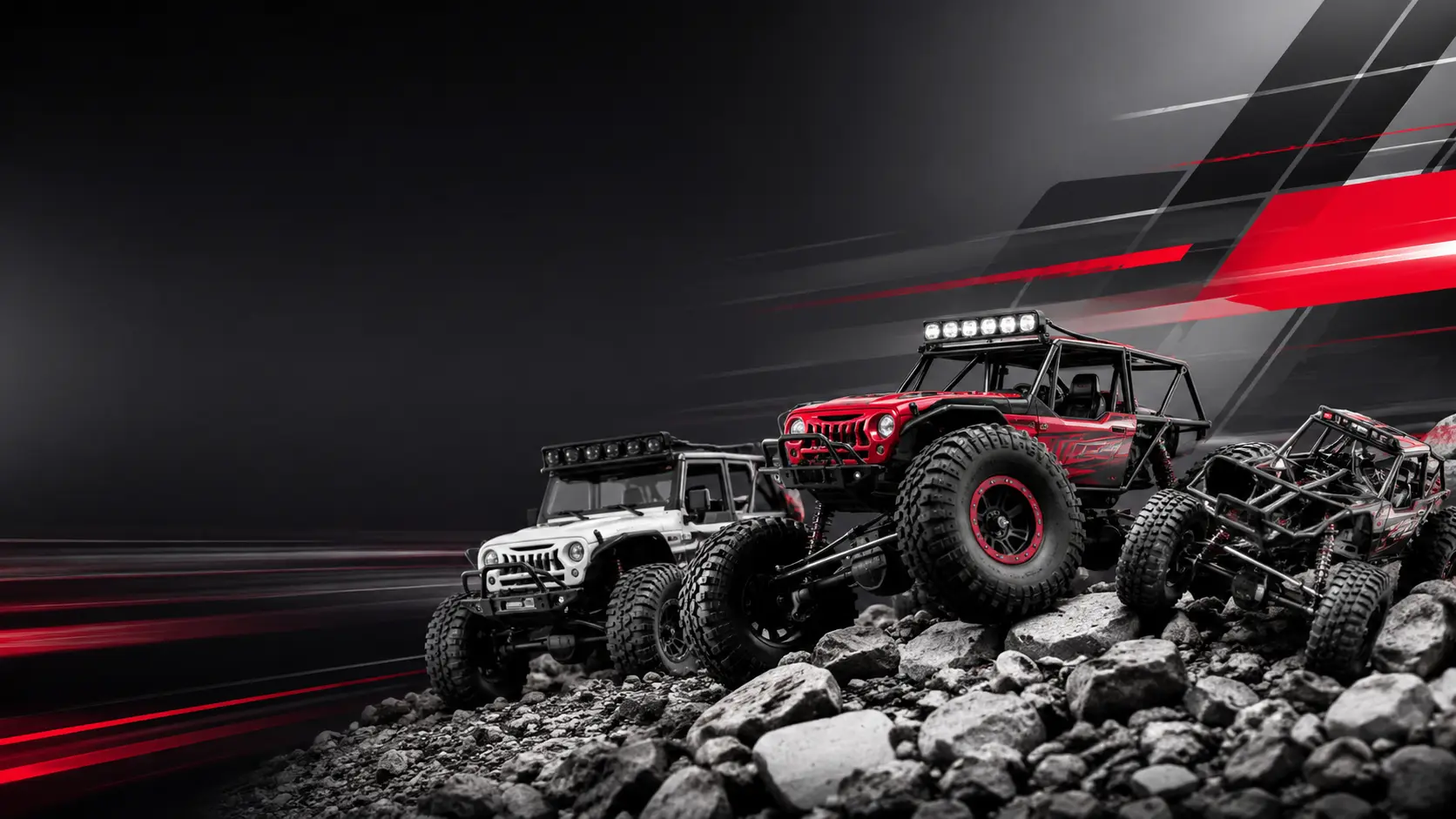
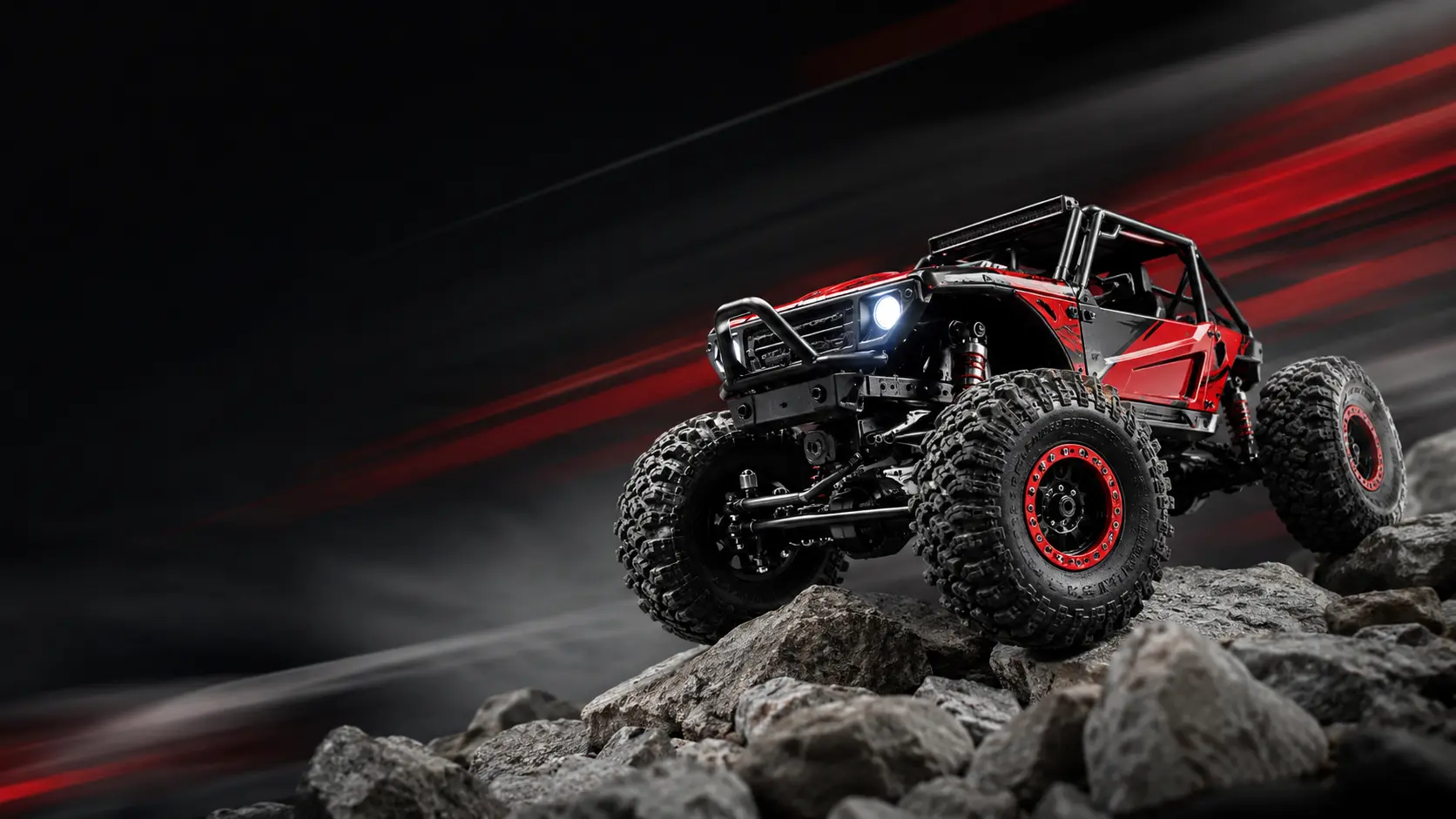
I still have a 2011 Wraith in the garage. It's been rebuilt three times, run through mud that would embarrass a Jeep, and has outlasted two transmitters and a battery charger. When I pull it out at the trail, guys who haven't touched an RC car in years immediately recognize it — the tube chassis, the exposed roll cage, the Mad Max stance. That kind of instant recognition doesn't happen by accident.
Axial launched the Wraith in 2011 and, in doing so, created an entirely new category: the RTR tube chassis rock racer. Nothing quite like it existed at that price point before. Fourteen years later, the Wraith 1.9 is still on the shelves. The question worth asking in 2026 is brutally simple: with the RBX10 Ryft running brushless electronics and the Capra UTB10 offering portal axles and four-wheel steering, does the Wraith earn a fresh buyer's $400 — or is it riding entirely on legacy cachet? Let's find out.
Axial Wraith 1.9 — Specs at a Glance
| Spec | Detail |
|---|---|
| Scale | 1/10 |
| Drive | 4WD, shaft-driven |
| Chassis | Full tube composite rock racer cage |
| Wheelbase | 308 mm (12.13″) |
| Length / Width / Height | 451.6 / 223.3 / 223.3 mm |
| Weight | ~2.1 kg (4.65 lb), no battery |
| Ground clearance | 69.4 mm (2.73″) |
| Motor | Axial 540-size 35T brushed |
| ESC | Dynamite AE-5L waterproof, 2–3S LiPo, drag brake, LED controller |
| Radio TX | Spektrum STX2 2.4 GHz pistol |
| Receiver | Spektrum SRX200 |
| Servo | Tactic TSX45 metal gear, 151 oz-in @ 6V |
| Axles | AR44 hi-pinion solid axles |
| Transmission | AX10 3-gear, 42:1 final drive |
| Driveshafts | WB8 HD Wildboar |
| Tires | Licensed Nitto Trail Grappler M/T 1.9″ (S30 compound) |
| Wheels | KMC XD229 Machete 1.9″ |
| Battery | 2–3S LiPo or 5–9 cell NiMH, EC3/IC3 connector (not included) |
| Top speed | ~15 mph (2S) / ~20 mph (3S) |
| Current SKUs | AXI90074T1 (Orange), AXI90074T2 (Black) |
| Street price | ~$399 |
Variants worth knowing: The original 2.2 Wraith (AX90018, 2011) and the Wraith Spawn RTR (AX90045, late 2014) are both discontinued. The Wraith 1.9 RTR, launched in 2019 as a full redesign with AR44 axles and updated electronics, is the only Wraith that Axial currently produces. If you see Spawn listings at your local dealer, that's old stock clearing out.
→ Check the current price on Amazon
The Wraith's Legacy — Why It Still Matters in 2026
When Axial dropped the original Wraith in 2011, tube chassis vehicles existed in RC — but they were kit builds for dedicated hobbyists. No one was selling a RTR roll-cage rock racer for under $400 to the mass market. The Wraith changed that. It took a look that had existed only in scratch builds and expensive competition rigs, and put it in a box on hobby shop shelves.
The formula worked because the design did something specific rather than trying to do everything. It wasn't a scale crawler imitating a Jeep Wrangler or a Bronco. It wasn't a basher trying to be a speed machine. It was a rock racer — built to look like it rolled off a Baja prerunner course and into a rock pile — and it nailed that aesthetic so completely that the platform has been continuously sold, reissued, and expanded for over a decade.
The tube chassis created a community built around customization. Because there's no scale body to preserve, builders went wild: custom paint schemes on the exposed cage, light bars weaving through the tubes, spare tires mounted on back, scale accessories hung wherever they fit. A Wraith 1.9 in someone's hands for six months looks nothing like anyone else's. That personalization culture is part of why the aftermarket for this platform is enormous — Yeah Racing, Vanquish, SSD, Treal, and Pro-Line have all published dedicated Wraith upgrade parts, and most of them are still actively produced in 2026.
The Wraith also benefits from parts cross-compatibility with the SCX10 II — the AR44 axles, the AX10 transmission, and much of the link geometry overlap. That means a massive parts ecosystem beyond the Wraith-specific aftermarket. Parts availability for a platform launched over a decade ago rarely looks this healthy. For the full picture of where the Wraith fits in Axial's current lineup, see our complete Axial brand guide.
Wraith 1.9 — Rock Racer & Off-Road Performance
Let's be honest about what the Wraith is built for before talking about how it performs: this is a rock racer, not a crawler and not a basher. It wants to go over broken terrain at a medium pace — navigating rocks, ledges, and rough ground with attitude. It is not trying to slow-crawl competition courses and it is not trying to jump a football field. Right in the middle of those two extremes is where it excels.
The 35T brushed motor on 2S gives you a smooth, controllable power delivery that works well on uneven terrain. You're not going to wheelie into a rock face by accident. Step up to 3S and you get significantly more punch — enough to feel like a real rock racer and to do some respectable jumping — but you're also pushing the stock motor and AE-5L ESC toward their thermal limits on extended 3S runs. Keep an eye on motor heat if you're pushing hard on 3S, especially in warm weather.
On terrain, the AR44 hi-pinion solid axles give you a better approach angle than traditional low-pinion designs and a respectable amount of articulation. The link geometry is well tuned for a vehicle of this size and purpose — you won't get the extreme flex of a comp crawler, but you get enough droop and travel to keep wheels planted on broken ground without the body pitching dramatically. The WB8 Wildboar driveshafts handle the articulation without binding, which is more than can be said for some cheaper platforms.
Where the Wraith gets genuinely fun is on rock racing terrain — sloped slabs, moderate ledges, loose gravel runs. The tube chassis gives you a unique feel when you're sliding over rocks: there's a kind of flex and give that a solid plastic body doesn't replicate. I've run the Wraith 1.9 side by side with an SCX10 III on the same trail and the driving experience is just different — more visceral, more alive. The SCX10 III is technically more capable on very slow technical climbs, but the Wraith is more fun to actually drive fast.
Where it falls short: The stock Tactic TSX45 servo at 151 oz-in is adequate for casual use but you'll feel it working hard on loose terrain with sticky tires. The stock plastic shocks do their job but leak over time and don't hold up to hard landings. Top speed is modest — realistically 15 mph on 2S, touching 20 mph on 3S — which is appropriate for rock racing but will feel slow if you're coming from a basher background. The Spektrum STX2 transmitter is functional but it's a starter unit: no third channel, no AVC, no telemetry. It gets the job done, nothing more.
For an upgrade path on the shock front, our RC crawler shocks guide covers the best aluminum replacements that fit the Wraith platform.
Build Quality & Durability
The Wraith 1.9's frame is its party piece: a full composite tube chassis molded in a single piece that mimics the look of welded steel tube without the cost or weight penalty. It's stiffer than it looks and far more durable than a thin plastic pan chassis. In three years of running the 1.9 specifically, I've cracked exactly one mounting boss — on a face-first drop off a boulder that would have destroyed most other platform components. The chassis itself survived.
The AR44 axles are proven hardware. They've appeared across the SCX10 II, the Capra, and multiple other Axial platforms, and the aftermarket knows them well. The ring and pinion are robust for this class and the hi-pinion design improves ground clearance compared to the older AR45 setup. The WB8 Wildboar driveshafts handle real-world articulation without the whipping and binding issues that plague cheaper universal-joint designs.
What breaks first — and in what order:
The plastic suspension link ends are the weakest link on this platform, literally. They're the first thing most Wraith owners replace after a hard session. Axial's own legacy tuning documentation for the original Wraith recommended swapping in steel ball studs because plastic ones distort under torque and accumulate dirt that causes steering bind — that advice applies equally to the 1.9. This is an easy and inexpensive fix (Yeah Racing and SSD both make Wraith-compatible steel link rod ends), but it's annoying that it needs to happen at all.
The stock plastic shocks are next. They seal reasonably well out of the box but start weeping after extended use, particularly if you run the truck hard on 3S. Oil-filled aluminum replacement shocks from Axial's own parts catalog or the broader Traxxas/Integy ecosystem solve this permanently.
The servo horn is a legitimate frustration. The stock plastic horn can strip under high-load steering situations, particularly when the front tires are wedged against a rock. A metal servo horn is a cheap upgrade that eliminates this failure point — and when you're at it, a servo upgrade to a 25 kg+ unit like the Savox SW-0231MG is the single biggest handling improvement you can make. Check the Savox SW-0231MG on Amazon.
The good news: the drivetrain itself is genuinely long-lived. The 35T brushed motor runs hot on 3S but survives with reasonable run-time management. The AX10 transmission has proven itself across a decade of platform use. My 2011 Wraith — which runs an upgraded 2400Kv motor now — still has its original gearbox. That level of drivetrain longevity is not common in this hobby.
The Tube Chassis Aesthetic — Why Design Still Sells
This section probably doesn't need to exist for every RC car review. But with the Wraith, the design is a primary purchase driver — not an afterthought — so it deserves treatment.
The exposed tube chassis is to the RC world what a baja bug is to full-size off-road: a machine that makes its mechanical bones the visual statement. There's no body to protect, no scale hood to keep pristine. The cage is the look. You can see the motor. You can see the transmission. You can see the battery sitting in the frame. When it's covered in trail dust and you're hosing it down, that's not a chore — it's part of the identity.
This resonates with a specific type of hobbyist: the builder. The person who doesn't want a finished thing but a canvas. The tube chassis is the best base in RC for customization precisely because so much of it is already visible and accessible. Light bars threaded through the tubes look factory-correct. Rock sliders welted onto the lower cage actually function. A spare tire mounted on the rear carrier looks like it belongs. Scale accessories (see our RC crawler scale accessories guide) drape naturally on the Wraith in ways that feel forced on a sealed scale body.
For comparison: scale crawlers like the SCX10 III are built around preserving a specific licensed body. Bashers like the Kraton or Outcast are built around pure kinetic impact. The Wraith occupies neither camp — it's the post-apocalyptic off-road racer that suggests a story rather than a brand. That's a harder thing to market but a more enduring thing to own. Fans of Ultra4 racing, Baja 1000 prerunners, and the dune buggy aesthetic understand this immediately. Everyone else has to see it in person before they get it.
For a deeper look at tube chassis platforms and how to choose between RTR and kit options, our RC crawler tube chassis guide covers the full field.
Wraith vs. Axial RBX10 Ryft — The Old vs. New Rock Racer
The RBX10 Ryft is the most natural comparison to the Wraith because Axial designed it for the same conceptual space: a tube chassis rock racer RTR. But the gap between these two vehicles is real and worth being direct about.
| Spec | Wraith 1.9 RTR | RBX10 Ryft RTR |
|---|---|---|
| Price | ~$399 | ~$499–530 |
| Wheelbase | 308 mm | 387 mm |
| Weight | 2.1 kg | 3.29 kg |
| Motor | 35T brushed 540 | 2200 Kv brushless |
| ESC | Dynamite AE-5L (3S max) | Spektrum Firma 130A Smart (4S capable) |
| Radio | Spektrum STX2, 2-channel, no AVC | Spektrum DX3 with AVC + telemetry |
| Shocks | Plastic threaded oil-filled | Aluminum threaded long-travel oil-filled |
| Tires | Nitto Trail Grappler 1.9″ | Interco TSL Bogger |
| Final drive | 42:1 | Deeper with brushless torque |
| Platform age | Design lineage from 2011 | 2020 |
A few corrections to common online comparisons: the Ryft does not run Castle Creations electronics — it ships with Spektrum Firma Smart electronics and AVC (Active Vehicle Control), which is a genuine differentiator. And the Ryft's shocks, while long and impressive-looking, are not piggyback reservoir shocks — they're long-travel single-coilover aluminum units. Still a significant step up from the Wraith's plastic shocks, but worth knowing accurately.
Performance gap: The brushless Ryft is meaningfully faster, more responsive, and more capable on aggressive terrain. The AVC system provides electronic stability that genuinely helps on high-CG moments. The longer wheelbase (387 mm vs 308 mm) makes the Ryft more stable at speed. On technical rock sections, the Ryft's brushless torque management gives it an edge. This isn't a close race in raw capability.
The case for the Wraith anyway: At roughly a $100–130 price difference, the Wraith is the more accessible entry point. It's lighter, easier to manage as a first rock racer, and the brushed drivetrain is simpler to service and understand. The aftermarket is more mature — a decade-plus of community development means more custom parts, more build inspiration, and more forum knowledge than the newer Ryft platform can yet offer.
If you want maximum stock performance and you're comfortable with brushless systems, buy the Ryft. If you want a rock racer platform to build on, learn on, and customize over time, the Wraith is the smarter buy. Our full RBX10 Ryft review (see our RBX10 Ryft review) goes deeper on what the Ryft does best.
Wraith vs. Axial Capra 1.9 — Tube Chassis Comparison
The Capra UTB10 (Unlimited Trail Buggy) is the other Axial tube chassis platform, and it's a more technically capable machine — but for different terrain and a different buyer.
| Spec | Wraith 1.9 RTR | Capra UTB10 1.9 4WS RTR |
|---|---|---|
| Price | ~$399 | ~$559 |
| Axles | AR44 hi-pinion solid (no portals) | Currie F9 portal axles front & rear |
| Steering | 2WS | 4WS (front + rear, 3rd channel) |
| Final drive | 42:1 | 45.37:1 (deeper crawl gearing) |
| Motor | 35T brushed | Axial 540 brushed |
| ESC | Dynamite AE-5L | Spektrum Firma 40A brushed waterproof |
| Radio | Spektrum STX2 (2-channel) | Spektrum DX3 (3-channel with rear steer control) |
| Tires | Nitto Trail Grappler 1.9″ | Pro-Line OE Mickey Thompson Baja Pro X |
| Aesthetic | Rat-rod / rock racer / Mad Max | Buggy / trail racer / comp-inspired |
The Capra's portal axles give it significantly more ground clearance and the ability to crawl at lower speeds without heat. Four-wheel steering — available as a factory-standard feature on the current UTB10 — makes the Capra dramatically more maneuverable in tight trail situations where you need the rear end to follow a different line than the front. On technical climbing, the Capra wins clearly.
On flat rock racing terrain where the Wraith is at home, the advantage reverses. The Wraith is lighter, more natural to drive fast, and more at home on the kind of bashing terrain that overlaps with rock racing. The Capra's deep final drive and steering complexity make it feel deliberate rather than reactive at speed.
Aesthetic split: The Capra looks like a competition trail buggy — low and wide with proper bodywork reference points. The Wraith looks like something welded in a desert garage for the apocalypse. Both are tube chassis, but they read completely differently. This is not a trivial factor: many Wraith buyers choose it specifically for the look, not just the capability.
The Capra makes more sense for crawling enthusiasts who want tube chassis aesthetics without the scale body commitment. The Wraith makes more sense for rock racers, builders, and anyone who wants the iconic platform with the bigger aftermarket legacy.
Best Upgrades for the Wraith 1.9
The Wraith's architecture is honest about what it is out of the box: a solid base that rewards investment. Here are the upgrades by order of impact, with Amazon availability confirmed.
1. Brushless conversion — the single biggest performance upgrade
Dropping a Hobbywing QuicRun WP 1080 ESC and a matching 2400–3000 Kv brushless motor into the Wraith transforms it. The stock motor bay fits a 540-size motor without modification, and the AE-5L is easily removed. You'll want to run 2S-3S for balance, and a motor under 3000 Kv to keep top speed reasonable on this chassis. Total investment: roughly $80–100 for the combo.
Hobbywing QuicRun WP 1080 G2 on Amazon
Our RC crawler brushless motor guide covers the best motor/ESC combos for the Wraith specifically, and our brushed vs. brushless explainer is worth reading if you're on the fence about whether to upgrade at all.
2. Servo upgrade — mandatory for sticky tires
Stock at 151 oz-in, the Tactic TSX45 servo is fine for casual use on stock tires. Once you add traction compound, beadlock wheels, or soft-compound aftermarket tires, you'll feel it struggling on locked rocks. A Savox SW-0231MG or Hitec HS-7950TH in the 25 kg+ bracket is the standard upgrade. Expect to add an external BEC (around $10) if you're running a high-draw servo on the AE-5L.
For a full comparison of crawler servos and how to size one for the Wraith, see our best RC crawler servos guide.
3. Steel link ends — fix this before anything else breaks it
The plastic ball studs and link ends are universally agreed to be the first point of failure on this platform. Yeah Racing aluminum front knuckles and SSD HD D60 knuckles for the Wraith are both confirmed on Amazon US and are common first upgrades. For rod ends specifically, check Vanquish Products' direct site or AMain Hobbies — Amazon coverage for steel Wraith link sets is inconsistent.
4. Tire upgrade — grip and scale accuracy
The stock Nitto Trail Grappler M/T 1.9s are legitimate tires, not cheap foam-stuffed placeholders. They look great and grip reasonably well on natural terrain. If you want more aggressive bite, Pro-Line Hyrax 1.9 G8 tires are the go-to upgrade for mixed terrain — sticky, durable, and perfectly sized for the Wraith's wheel wells. For scale accuracy on a trail-runner build, the Pro-Line Interco TSL Super Swamper 1.9 is the classic choice.
For a full breakdown of 1.9″ tire compounds and tread patterns, our RC crawler tires guide covers the full field.
5. Shock upgrade — stop the leaking
The stock plastic shocks work adequately but won't last forever. Axial's own aluminum 90mm shocks (AX30092) are the direct-fit replacement, or go with Pro-Line Pro-Spec aluminum shocks or comparable Integy units. All will outlast the stock plastics and give better damping consistency.
6. Battery — go 3S hardcase
The AE-5L is rated for 3S, and the Wraith benefits from the extra punch. A hardcase 3S 5000mAh LiPo sits cleanly in the forward battery tray.
Check 3S LiPo options on Amazon
For charger pairings, see our best RC car battery chargers guide. For battery selection generally, our RC LiPo battery guide explains the tradeoffs between capacity, discharge rating, and battery size for the Wraith's battery tray.
7. Transmitter upgrade
The Spektrum STX2 is a 2-channel starter pistol. If you add a dig setup or want a third channel for future mods, upgrading to a Spektrum DX3 or DX5 Pro opens up programmability and DSMR binding. Our best RC car transmitters guide covers pistol-grip options that pair well with Axial's Spektrum receiver ecosystem.
8. LED light bar
The tube chassis is genuinely the ideal platform for scale lighting. Light bars thread through the roll cage naturally, and the AE-5L has a built-in LED control port. Mounting options that would look bolted-on and awkward on a scale body look factory-original on the Wraith. This is a $20–40 upgrade that dramatically improves the vehicle's presence at night runs and scale events.
9. Scale accessories
Jerry cans, spare tire mounts, tow straps, and scale gear all read as authentic on the Wraith. See our RC crawler scale accessories guide for the best options that mount cleanly to tube chassis frames.
FAQ
Q: Is the Wraith 1.9 still worth buying in 2026?
Yes — with a clear understanding of who it's for. If you want the iconic tube chassis rock racer platform with the largest aftermarket, the most build inspiration, and the best price-to-fun ratio at $399, the Wraith delivers. If you want maximum stock performance out of the box, the RBX10 Ryft's brushless system is a better choice. The Wraith's strength in 2026 is its build platform appeal and the maturity of its parts ecosystem — not raw performance numbers.
Q: Wraith vs. RBX10 Ryft — which one should I choose?
If budget is the primary constraint and you want to build and customize over time: the Wraith. If you want a plug-and-play rock racer with better electronics, brushless power, and AVC stability without touching the internals: the Ryft. The Ryft is a better stock performer at ~$499–530; the Wraith is a better long-term builder's base at $399. They are different products for different hobbyists, and the overlap is narrower than people assume.
Q: Can you convert the Wraith 1.9 to brushless easily?
Yes, it's one of the cleaner brushless conversions in the crawler/rock racer segment. The motor bay accepts any standard 540-size motor. Drop in a Hobbywing QuicRun WP 1080 G2 (or the original 1080) with a 2400–2700 Kv motor, reconnect your sensor wire if using a sensored motor, and you're done in an hour. Total cost is roughly $80–100. The improvement in throttle response, low-end torque, and heat management is substantial.
Q: What's the difference between the Wraith 1.9 and the Wraith Spawn?
The Wraith Spawn (AX90045, launched late 2014) was a variant of the older 2.2 Wraith platform — same mechanical bones as the original 2011 Wraith, different body style with a lower, more aggressive silhouette and a distinct rat-rod aesthetic versus the Wraith's classic rock racer look. The Spawn is now discontinued and finding it in 2026 means hunting through back-order lists and old dealer inventory. The Wraith 1.9 (AXI90074, 2019) is a full redesign: smaller 1.9″ tires, AR44 hi-pinion axles (replacing the original's AR45), updated Spektrum electronics, and a lighter overall package. The 1.9 is the current truck; the Spawn is a piece of hobby history.
Q: Are Wraith parts still easy to find in 2026?
Remarkably yes. The AR44 axles, AX10 transmission, and most link and suspension components are still in active production through Horizon Hobby and the dealer network, because these parts carry across the SCX10 II and other Axial platforms. Third-party aftermarket parts from Yeah Racing, SSD, Vanquish, Treal, and Pro-Line remain widely available. The main gap is on body panels for the Wraith Spawn specifically — but for the 1.9 platform, parts supply is healthy. See our RC car scale sizes explained guide if you're navigating what crosses over between 1.9 and 2.2 platforms.
Conclusion
The Axial Wraith 1.9 is not trying to be the best rock racer on the market in 2026. It doesn't have to be. It has a specific identity — the iconic tube chassis rock racer that started an entire category — and it executes that identity with a combination of proven hardware, a massive aftermarket, and a price point that's stayed remarkably accessible while the hobby has inflated around it.
Buy the Wraith 1.9 if you want a builder's platform with the most customization potential in the segment, you're drawn to the tube chassis aesthetic, you're budget-conscious and plan to upgrade selectively over time, or you want an entry point into serious rock racing without overcommitting to brushless complexity. The learning curve is forgiving, the parts are findable, and a well-upgraded Wraith 1.9 can run circles around its stock spec.
Look elsewhere if you want the best stock performance at a similar price — the RBX10 Ryft at ~$100–130 more gives you brushless power and AVC electronics out of the box. If crawling capability and technical trail performance matter more than rock racing fun, the Capra UTB10 4WS with its portal axles and four-wheel steering is the more capable machine on tight technical terrain. And if scale realism is your priority — a licensed body, interior detail, scale accessories that read as a real vehicle — the SCX10 III does that job better than any bare-chassis platform can.
For everyone else: the Wraith has been worth buying for fourteen years. It still is.
→ Check the current price on Amazon — and see our complete Axial brand guide for the full lineup, or our RC crawlers complete guide to compare the Wraith against the full field before you commit.